
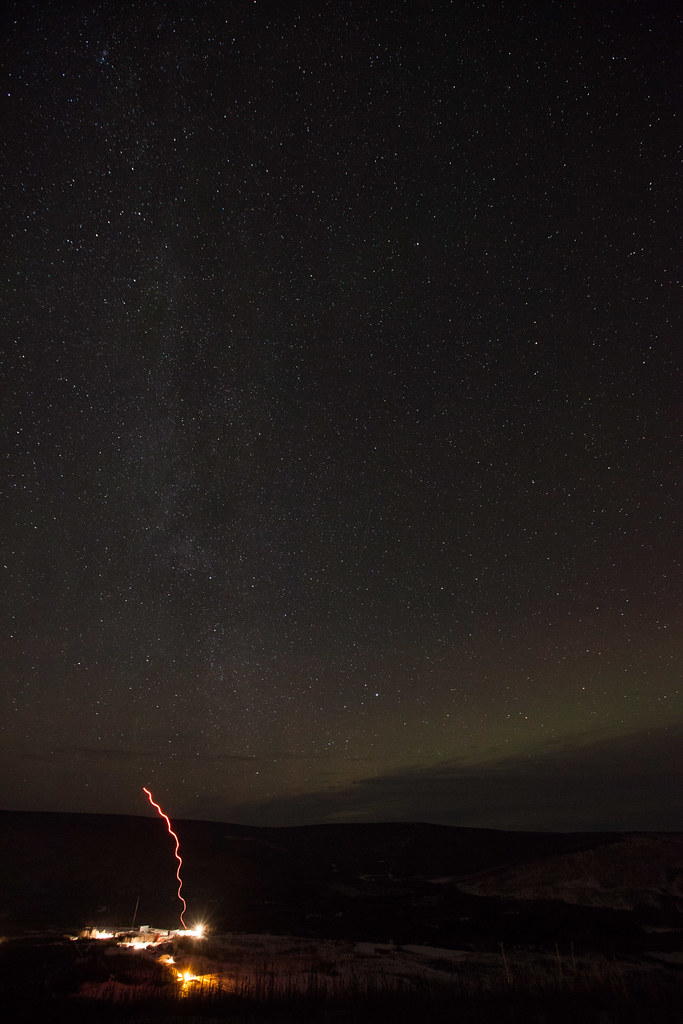
Auroras in Daylight: Clear Images from Smile Spacecraft
Auroras in daylight have been captured in stunning first images from the Smile spacecraft, showcasing Earth’s mesmerizing phenomena.
What Are Auroras?
Auroras are natural light displays predominantly seen in high-latitude regions around the Arctic and Antarctic. These stunning phenomena occur when charged particles from the sun collide with atoms in Earth’s atmosphere, resulting in vivid colors, primarily greens, pinks, and purples. The interaction creates beautiful, shimmering waves of light that dance across the sky.
Typically, auroras are best observed at night, but recent findings have shown that auroras in daylight are possible under certain conditions. The Smile spacecraft has captured remarkable images that reveal these daytime displays, challenging previous assumptions about when and how auroras can be seen.
These occurrences are scientifically significant as they provide insights into solar wind interactions and the Earth’s magnetic field. Understanding auroras can also enhance our knowledge of space weather, which impacts satellites and communication systems.
In addition to their scientific value, auroras captivate onlookers with their beauty and mystery. People travel from around the world to witness these enchanting lights, illustrating the profound connection between nature and human fascination.
The Significance of Daylight Auroras
The recent images captured by the Smile spacecraft have unveiled a fascinating phenomenon: auroras in daylight. This revelation not only adds to our understanding of these stunning displays but also highlights their significance in the study of Earth’s atmosphere.
Auroras, typically associated with the night sky, occur when charged particles from the sun interact with Earth’s magnetic field. Observing these brilliant colors during daylight hours provides researchers with unique insights.
- Enhanced Understanding: Daylight auroras allow scientists to study the dynamics of atmospheric processes in real-time, leading to a better understanding of the complex interactions that occur in the upper atmosphere.
- Technological Advancements: The Smile spacecraft’s ability to capture clear images of auroras during daylight represents a significant advancement in space exploration technology.
- Climate Insights: Investigating auroras in daylight may help scientists understand how solar activity influences climate patterns on Earth.
Ultimately, the discovery of auroras in daylight is not only visually captivating but also crucial for advancing our knowledge of space weather and its effects on our planet.
Smile Spacecraft’s Mission Overview
The Smile spacecraft, a cutting-edge satellite launched by NASA, is on a mission to explore the mysteries of auroras in daylight. This innovative project aims to capture unprecedented images of these stunning natural phenomena as they occur in Earth’s atmosphere. By utilizing advanced imaging technology, Smile is able to document auroras that have previously gone unseen during daylight hours.
One of the primary objectives of the Smile spacecraft is to enhance our understanding of the interactions between solar winds and Earth’s magnetic field. The mission will provide valuable data on how auroras form and evolve, particularly during periods of heightened solar activity. The spacecraft’s unique vantage point allows it to observe auroras from angles that ground-based observatories cannot achieve.
In its initial phase, Smile has already sent back remarkable images, revealing auroras in daylight that illuminate the sky in captivating colors. These images not only showcase the beauty of auroras but also serve as crucial scientific evidence for ongoing research in space weather and atmospheric science.
As the mission progresses, scientists anticipate that the insights gained from Smile will lead to a deeper understanding of auroras and their role in Earth’s climate system.
How Auroras Form
Auroras, often associated with the night sky, are natural light displays that occur when charged particles from the sun collide with gases in Earth’s atmosphere. The process begins in the sun, where solar winds release these particles into space.
Upon reaching Earth, these particles are directed by the planet’s magnetic field toward the polar regions. When they enter the atmosphere, they interact with oxygen and nitrogen molecules, resulting in stunning visual phenomena. This interaction releases energy in the form of light, creating the vibrant colors typically seen in auroras.
Interestingly, recent observations from the Smile spacecraft have captured auroras in daylight. This unprecedented view allows scientists to study these phenomena during times when they are usually concealed by sunlight. The imaging capabilities of the Smile spacecraft provide clarity and detail that were previously unattainable.
To summarize the formation of auroras:
- Solar winds release charged particles.
- Particles travel toward Earth and are guided by magnetic fields.
- Collisions with atmospheric gases produce light.
These processes culminate in the breathtaking displays of auroras in daylight, enhancing our understanding of this natural wonder.
Viewer Reactions to the Images
As the Smile spacecraft continues to capture stunning visuals of Earth, viewer reactions to the auroras in daylight have been overwhelmingly positive. Many enthusiasts and scientists alike expressed their amazement at the clarity and vibrancy of the images released.
- Social Media Buzz: Platforms like Twitter and Instagram have been flooded with posts sharing the breathtaking auroras in daylight. Users are captivated by the unexpected beauty of these phenomena during the day.
- Scientific Interest: Researchers are excited about the implications of these images for understanding atmospheric science. The clarity of the auroras provides valuable data for ongoing studies.
- Public Engagement: The images have sparked discussions about space exploration and its connections to Earth’s natural wonders, encouraging more people to take an interest in science.
Many viewers have remarked on how the auroras, typically associated with nighttime, appear in broad daylight, highlighting a unique aspect of our planet’s atmospheric dynamics. This phenomenon has not only enhanced our understanding of auroras but also ignited a sense of wonder about what else lies beyond our atmosphere.
By NASA Goddard Photo and Video via Openverse
Sources
OpenAI Safety Lead Quits: A Clear Warning Sign · 007 First Light DLC: Free Content You Can’t Miss! · Nintendo Switch 2: The Best Release Info You Need
